.jpg)
UI Designer
UX Designer
Visual Designer
User Researcher
User Surveys
User Persona
User Flow
Customer Journey
Competitive Analysis
Wireframes
Visual Design
Prototypes
Duration
10 days
Tools & Software
Figma
Adobe Illustrator
Adobe Dimensions
.jpg)

.jpg)
.jpg)
.jpg)
.jpg)
Summary: The project was the winner of Winter '24 Hackathon and the prompt we had to solve was to create a website that provides mental health support, such as mood tracking, stress management, or personalized coping strategies.
Problem: The mental health app sector is rapidly growing, fueled by increasing mental health awareness. Companies aim to incorporate apps into their wellness programs, recognizing that prioritizing employees' mental well-being directly correlates with boosting productivity. Currently, there are no available apps or websites designed for companies to help them achieve this goal.
Solution: We have created a user-friendly mental health website for companies, where their employees can track their mood, stress, and activity levels. Users can also receive helpful suggestions to manage stress and support their mental well-being.
Based on the data analysis and competitive analysis, we created and deployed a survey to our communities. The questions were about demographics, mental health, employment status, how often the participants use mental health support apps and what they would expect from one.
indicated they were employed and had poor mental health
indicated that they are likely to use a mental health app for tracking their mood and personal strategies
indicated that other health metrics would also be helpful to see in conjunction (sleep & physical activity)
indicated that they would find personalized tips and coping strategies helpful
TEST.jpg)
2.jpg)
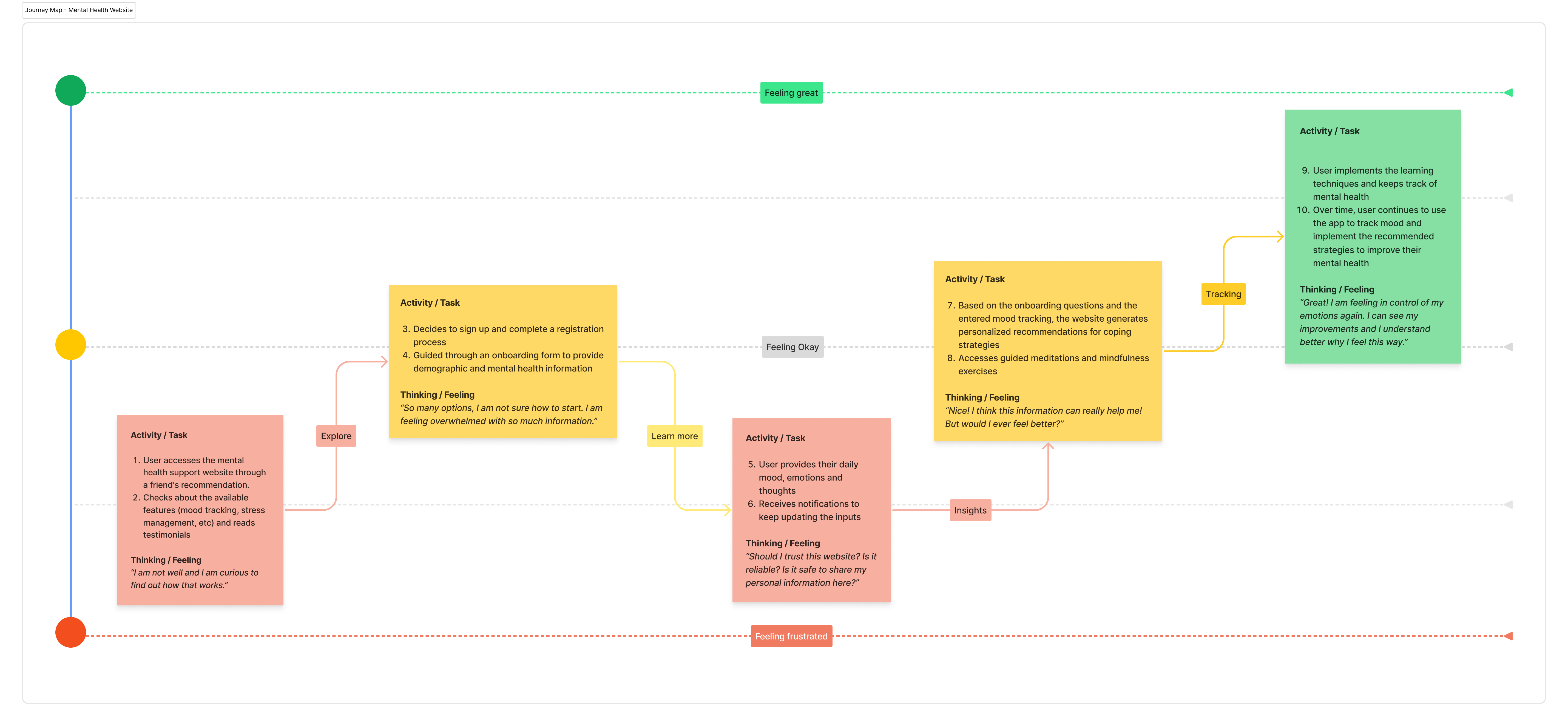
Designing the solution required a thorough understanding of the process of finding a mental health support app.

Strength
User friendly and intuitive design with emojis to define feelings and habits
Weaknesses
Lack of insights for long term tracking and subscription model
Opportunities
Provide meditation and collaborate with mental health professionals
Threats
Competition from other mood track apps with more features
.png)
Strength
High-quality content created by experience mediation specialists
Weaknesses
Limited features, repetitive content and subscription model
Opportunities
Provide tracking progress through user inputs about their feelings and mood
Threats
Regulatory challenges related to mental healthcare

Strength
Structured programs to address mental issues
Weaknesses
Repetitive exercises and a lot of effort from users to complete tasks
Opportunities
Personalize the user page based on their preferences and activities
Threats
Concerns about data privacy with sensitive information
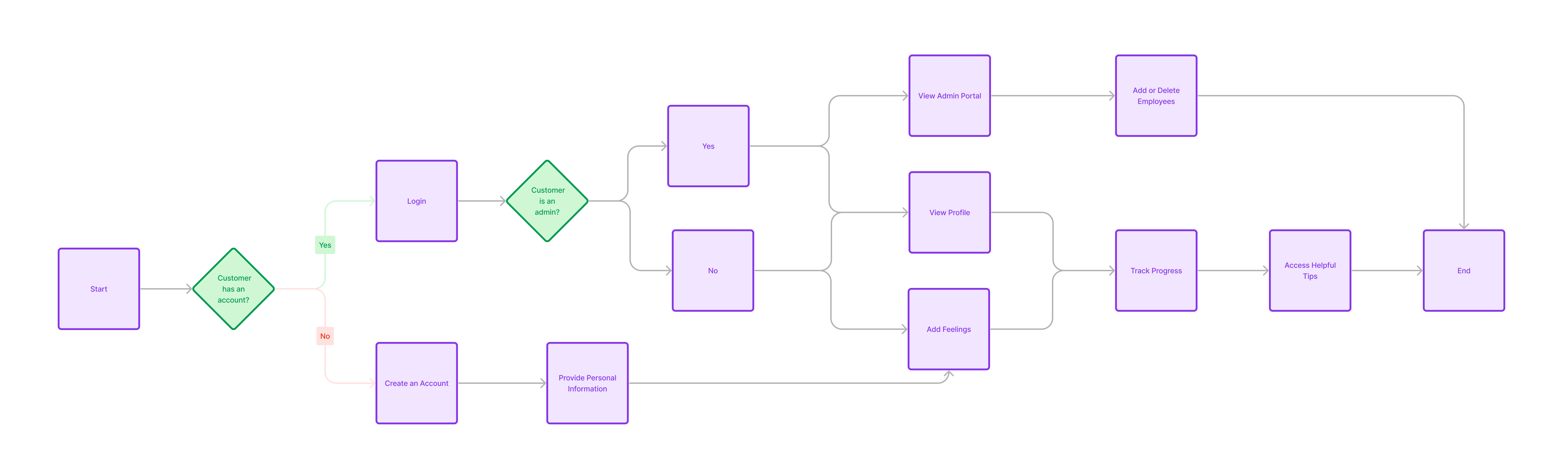
Based on the user research findings, I developed user flows in Figma, with a specific emphasis on the process of creating a profile and tracking progress on mental health inputs.
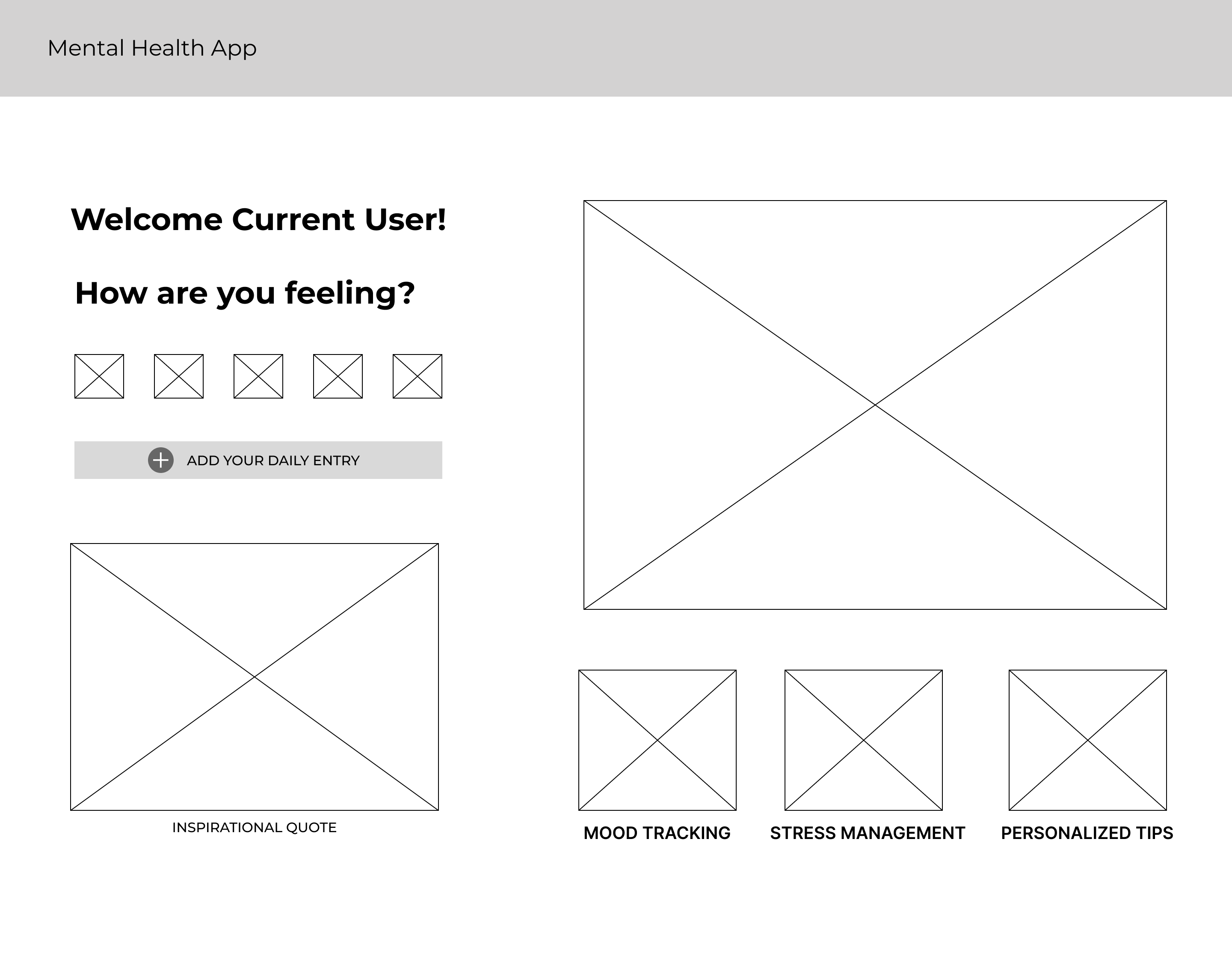
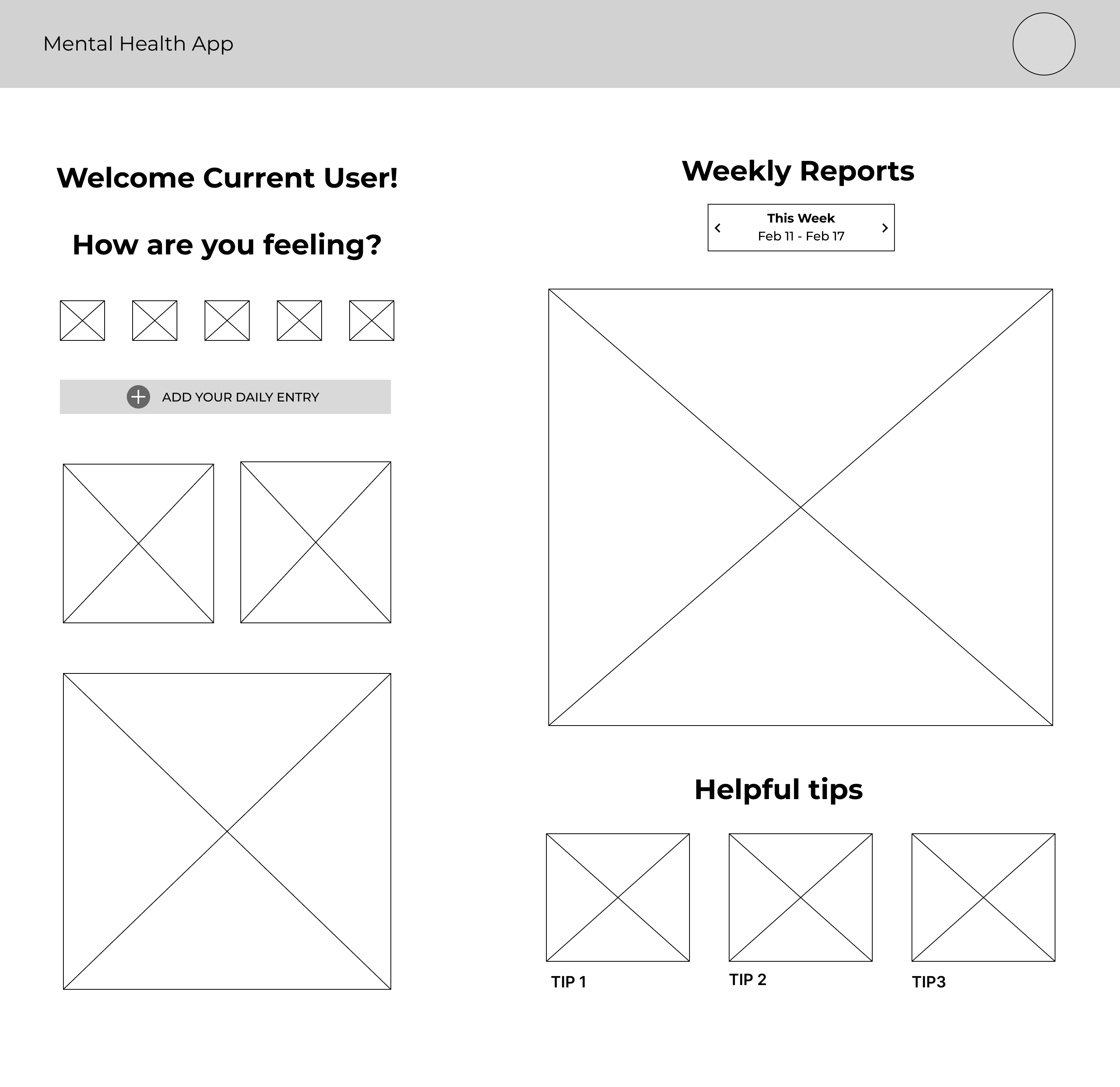
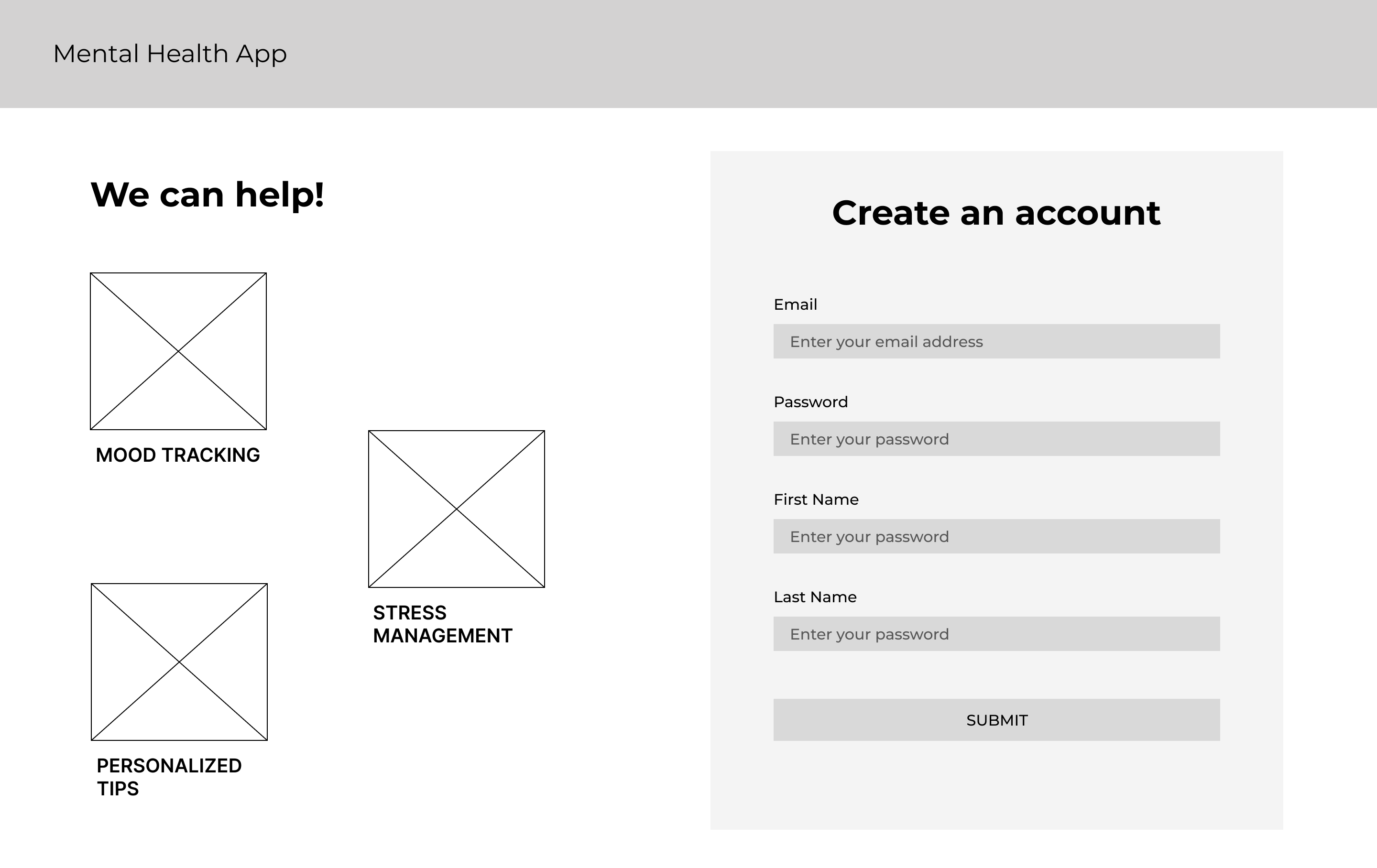
I created wireframes to see the functionality of the product and define possible changes before crafting the mockups.
.png)
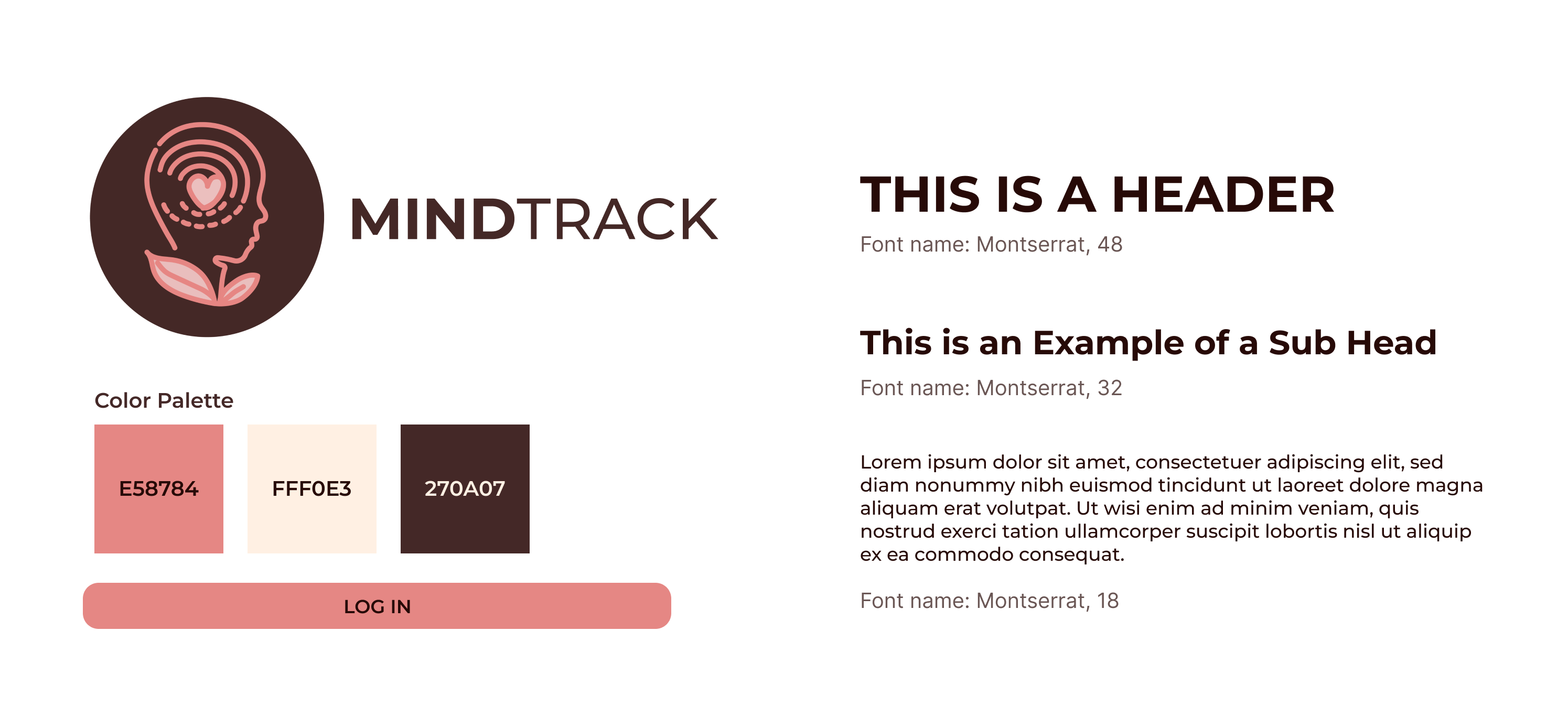
In the branding phase, we expected the project to have a calming atmosphere for a user to support their own mental health. The chosen colors are linked with feelings of calmness, nurturing, and compassion. And the logo conveys a holistic approach to mental health, emphasizing support, understanding, and acceptance.
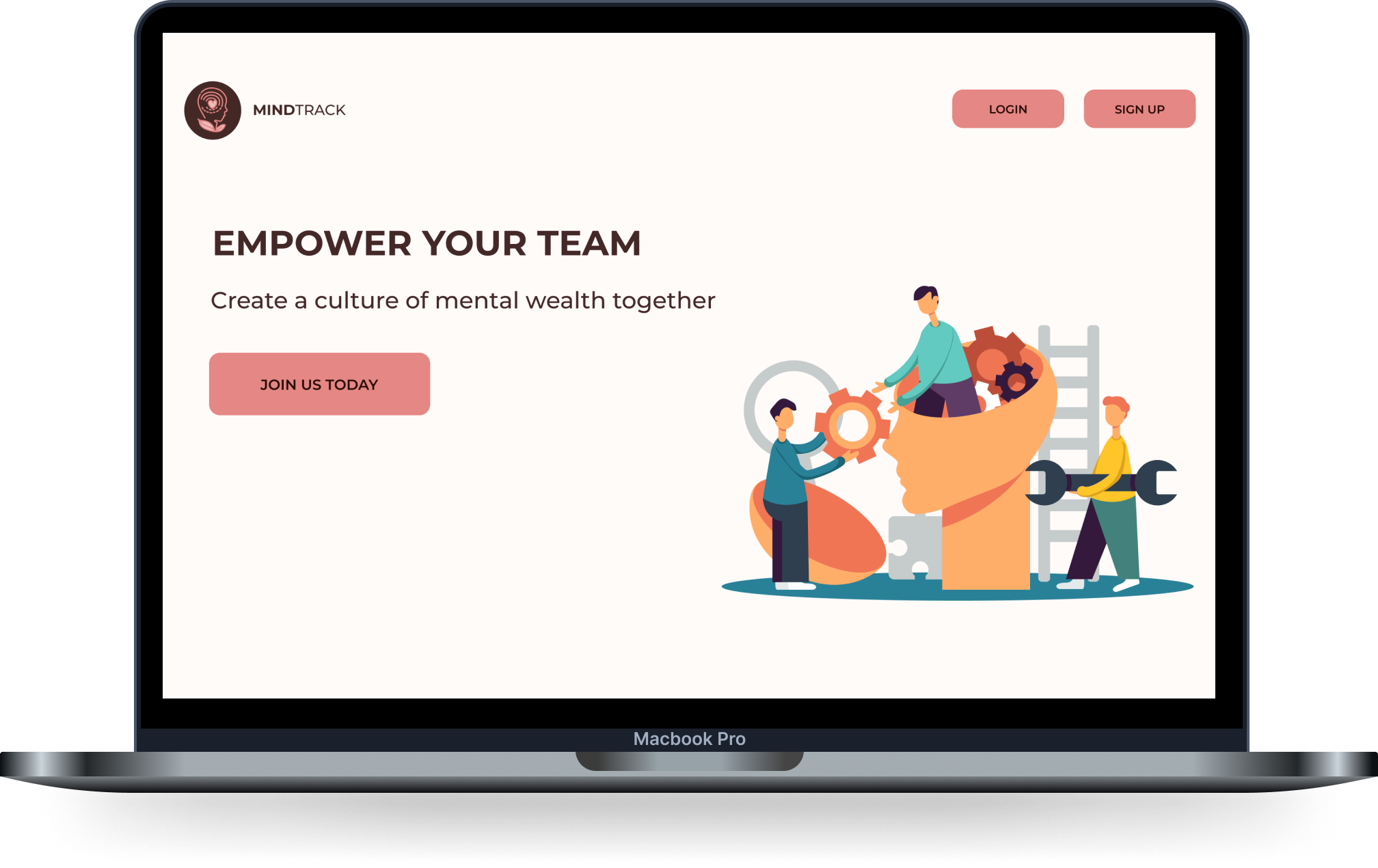
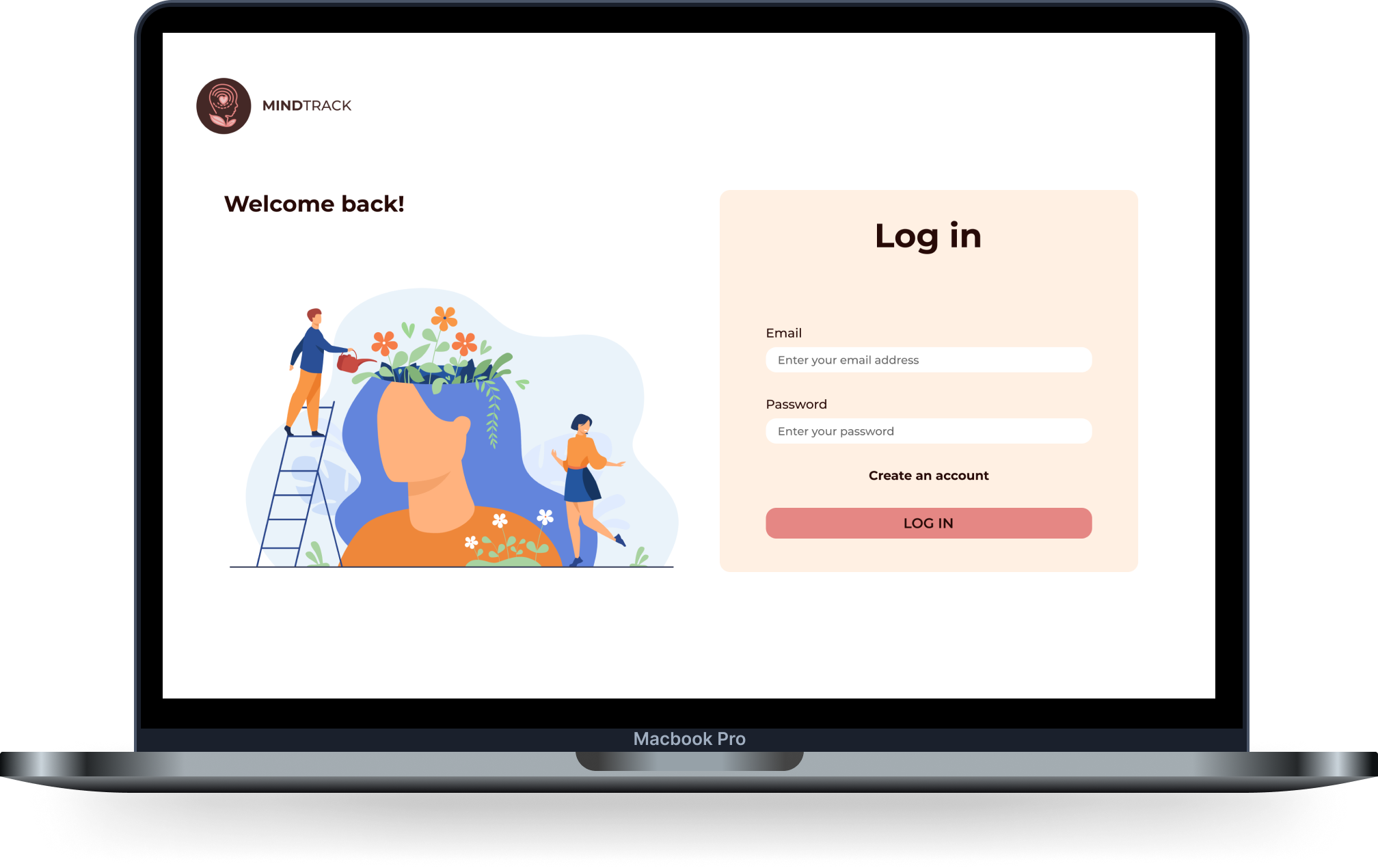
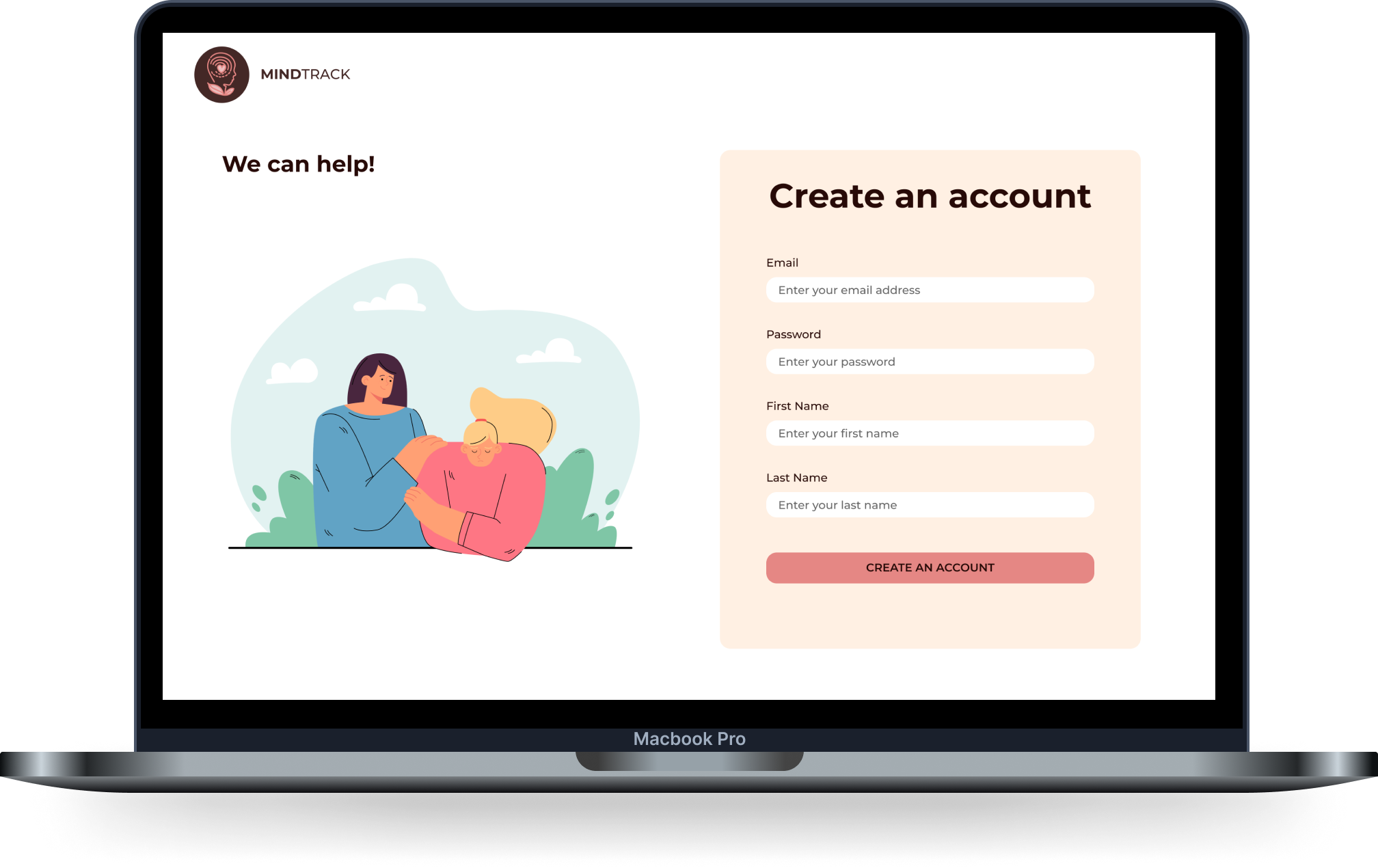
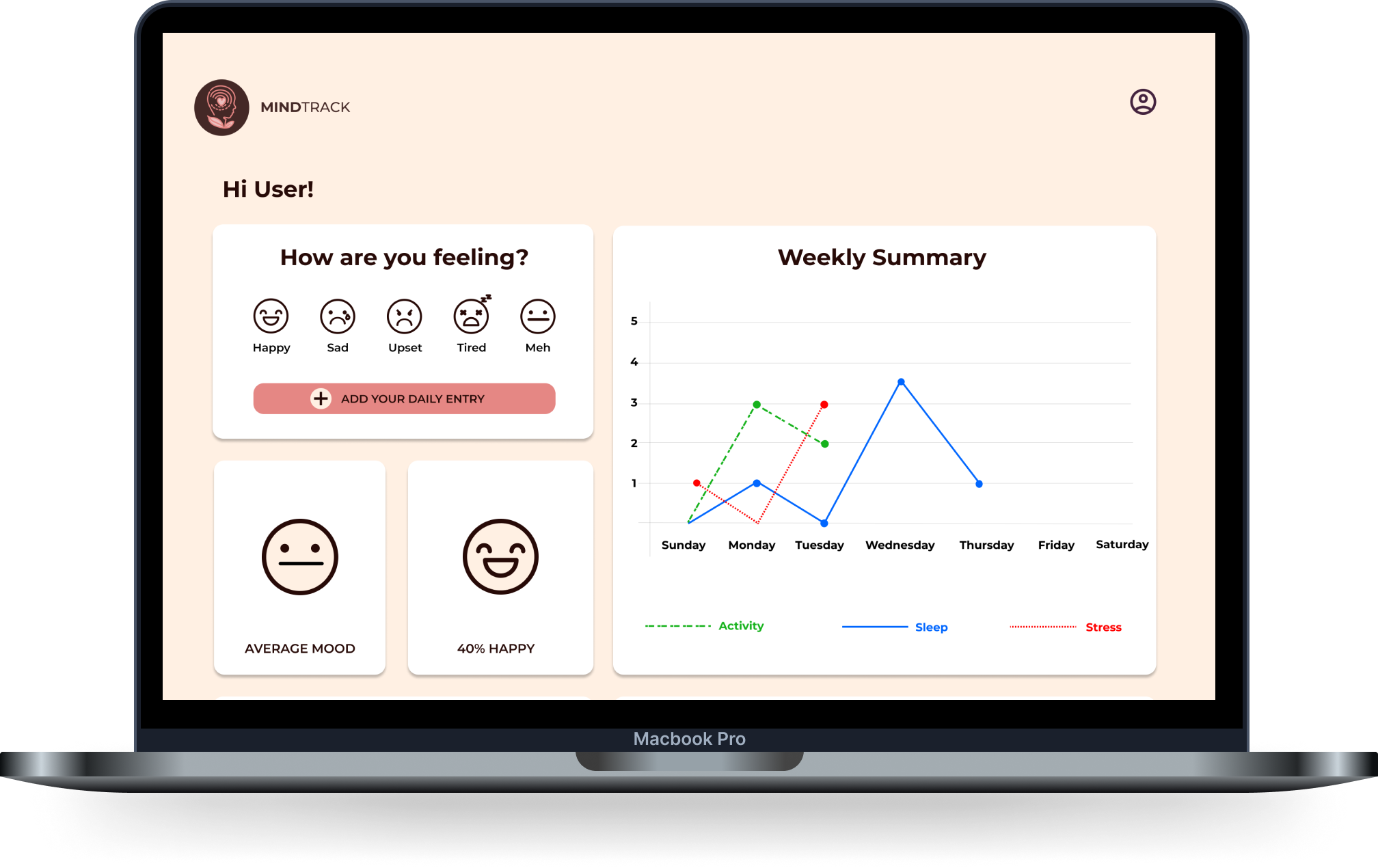
What we've learned: As a team we learned the value of agile methodologies, iterative progress, and continuous feedback. We were able to foster a dynamic and collaborative environment. Allowing us to rapidly and effectively develop the project. As UX Designers, we learned how to scope our design to match the realistic constraints of what could be built in the given time period.
Next Steps: Make the app responsive and provide health recommendations dynamic to the user’s imputed health metrics. Implement unit tests, integration tests, and end-to-end tests to validate the functionally of the app. Gather user feedback and iteratively improve the app based on user needs and preferences.

.png)